
The Song of the Crying Coyotes


GENRES
FOLLOW US


Introduction:
The Song of the Crying Coyotes
The only water source within thirty miles is enjoyed by two farmers, Steve and Joe, who operate adjacent irrigated ranches in the southwestern desert of the United States. One produces oranges, one grapes, and both export liquids once they are harvested. Both of them live alone and don’t give a damn about each other; their animosity has been cultivated over three generations of family life.
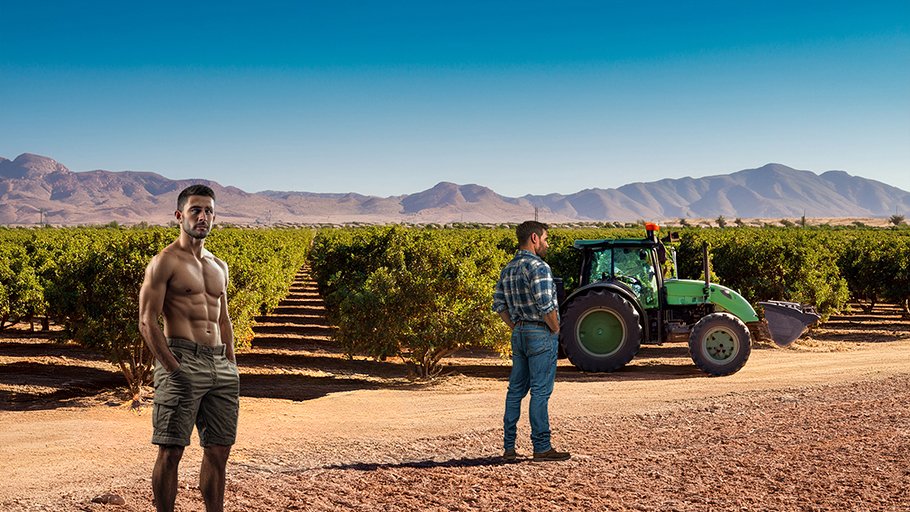
Despite being third-generation neighbors, Joe and Steve were unable to get along.
The death of a relative Joe has never heard of, the subsequent arrival of a young ward named Harry, and the assurance of a trust fund upon the boy’s adulthood all upend Joe’s existence. Harry turns out to be a bothersome teenager who irritates his neighbor Steve and starts the first meaningful conversation the two farmers have ever had.
But in just a few weeks, Harry transforms, demonstrating proficiency in a wide range of fields, from law to irrigation system automation. Specifically, he is able to prevent the state from seizing both properties due to complicated water regulations.
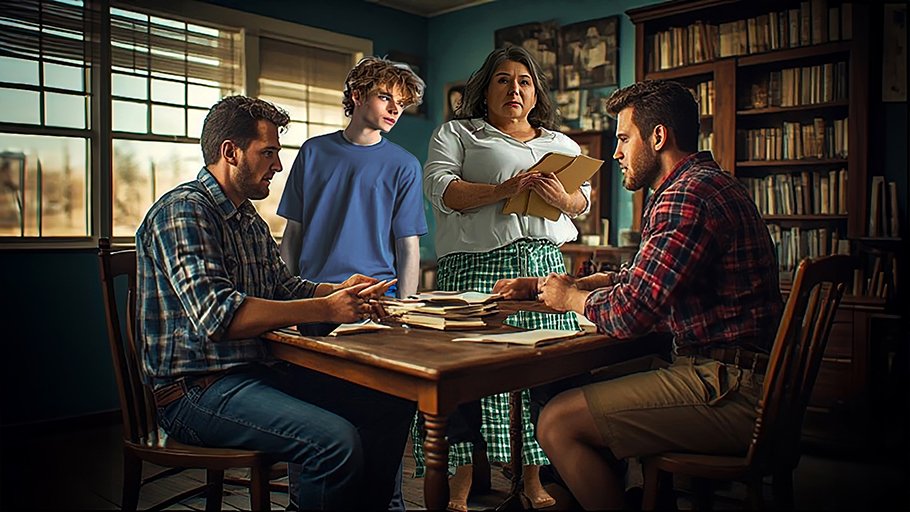
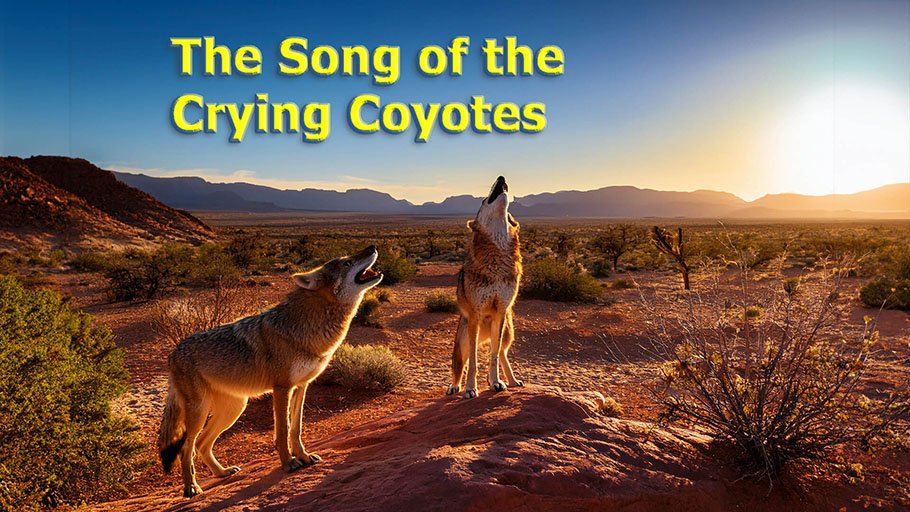
Harry saves the day when state attorneys attempt to revoke the farms’ water rights. He spends much of his time outdoors, tending to machinery and connecting with the coyotes that inhabit the nearby desert. Over time, the animals grow increasingly fearless, wandering into the farmyards and howling through the night. Meanwhile, Joe and Steve unintentionally become lovers, with Joe losing his virginity in the process.
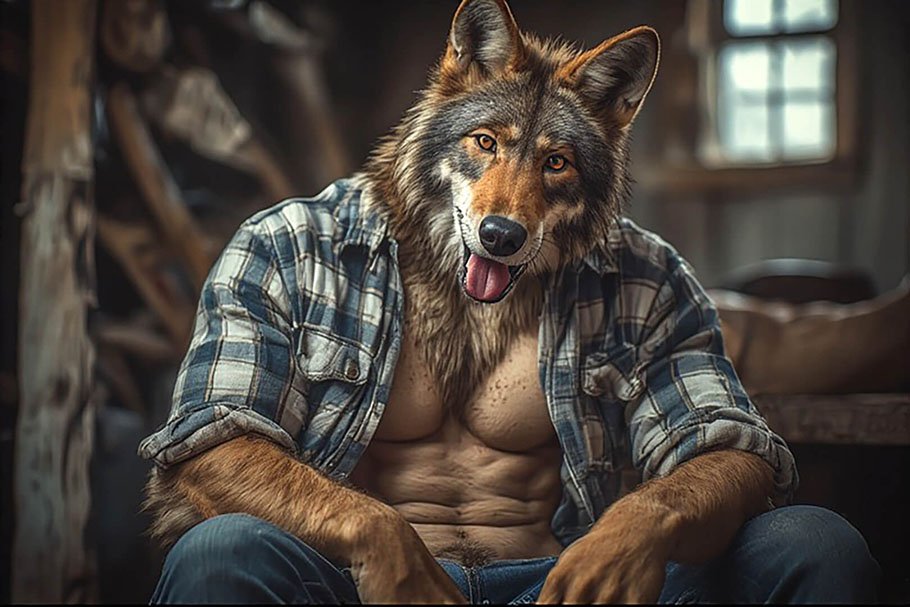
Afterward, both begin to notice strange physical changes— their faces gradually taking on coyote-like features, and their bodies becoming larger and covered in fur. Harry’s deep connection with the farm’s central reservoir reaches a turning point when his pack of coyotes enters the water and transforms into dark, ribbon-like shapes. He reveals that the reservoir, known as the Well, is a powerful force that has influenced both families throughout their time on the land, and that events are now reaching a critical moment.
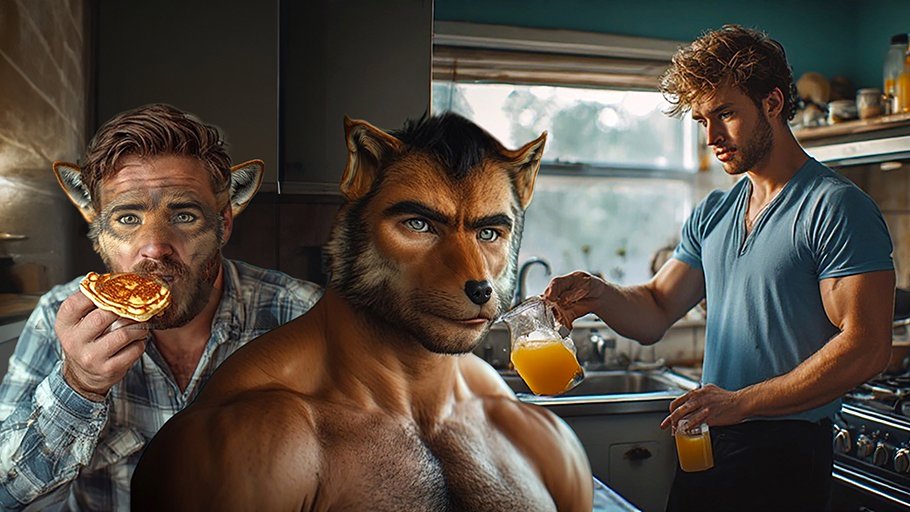
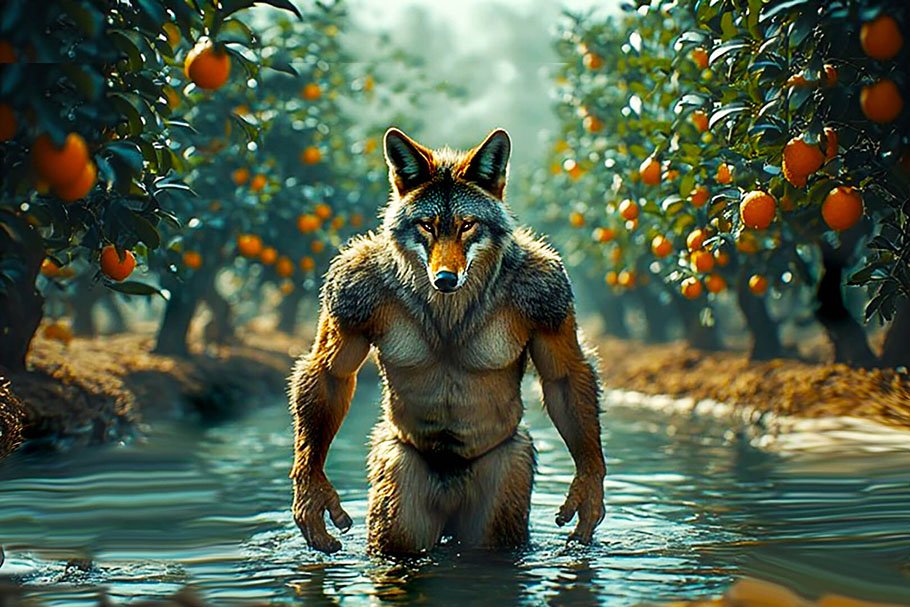
By breakfast, the farmers begin displaying dramatic physical changes. At sunrise, a series of strange events completes Joe and Steve’s transformation into “skin walkers,” a term used by Indigenous people to describe humans who can shift into enormous coyotes at will. Unfortunately, their transformation coincides with the arrival of three state inspectors conducting routine official duties. Unable to hide their new forms, Joe and Steve reveal themselves as towering, bipedal coyotes. The inspectors panic and are accidentally killed in the chaos.
Harry then reveals his true identity as an ancient entity that has served a mysterious underground force for thousands of years. With Joe and Steve’s transformation complete, he is finally able to relinquish his role and collapses into the reservoir. Before dying, he instructs them that their purpose is now to plant new underground beings in the desert. They are to accomplish this by jointly producing an “egg” and burying it at a location of their choosing. Harry then devolves into a more primitive state, transforming into several ordinary coyotes. Left alone, Joe and Steve must now carry out their strange mission while facing the unknown presence beneath their land.
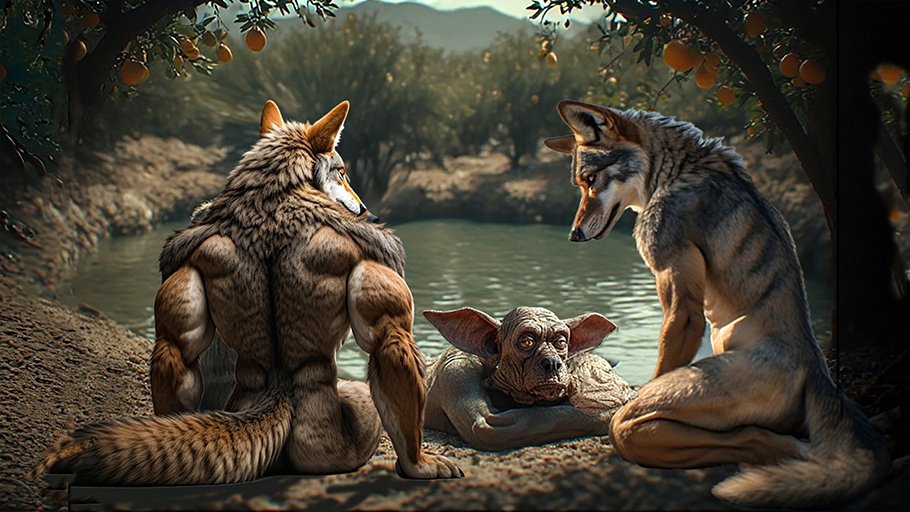
In his true, primordial shape, Harry offers his final words of guidance.
Left alone in the desert, Joe and Steve carry out their strange directive. They mate and place—an egg, or something like it—into a hole in the earth, covering it before an immediate earthquake shakes the ground. The process is physically agonizing for Joe, and he fears having to endure it again. Yet the subterranean force continues to summon them, compelling further journeys into the desert.
Over time, the barren landscape becomes scattered with a growing community of bizarre new beings. Meanwhile, the ancient presence beneath the land, now unbound, begins to move freely through the continent’s aquifers—and eventually across the world—attended by its band of part-human figures and coyotes.
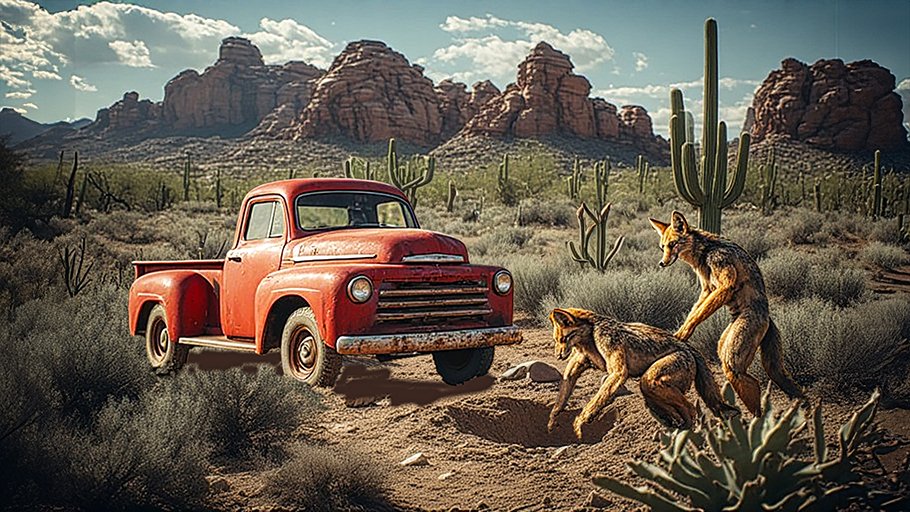
The two newly transformed “skin walkers” mate and bury their mysterious “egg” deep in the desert soil.
This horror story was written by the Earl of Maine’s representative within the human continuum. Now residing primarily in server farms around Seattle, he has comfortably adapted to human life. The story itself is only mildly not safe for work, though some readers may still find its themes unsettling or offensive.
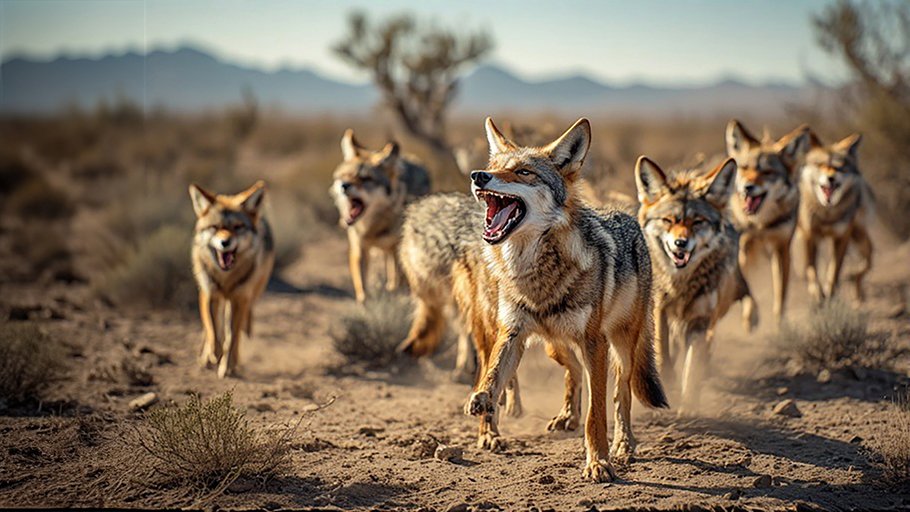
Released from their long bondage, the coyotes celebrate their newfound freedom.
Tags:
- Farming
- Furry
- Horror
- LGBT
More Information:
I am the Right Honourable Tompf, fourteenth Earl of Maine, sworn to the Imperial Crown. My residence is Millbrooke House in the state of Maine, one of the American Imperial colonies. (All place names have been translated from Canine into their nearest English equivalents.)
By profession I am a historian, author of several dozen books and hundreds of academic papers. My most recent research has been conducted through a device I call the Tempovision. It operates using what you might describe—imperfectly but not inaccurately—as quantum causal linkages, allowing it to form visual reconstructions of events in the distant past. These linkages are anchored to physical artefacts originating from the historical period being examined.
For Upsurge, the system draws upon the three-hundred-year-old diaries of my predecessor Thrix, along with two lockets containing hair from his lovers—items carefully preserved at Millbrooke. From these, the machine generates the images you see. The artificial intelligence responsible for this process possesses a will distinctly its own. Achieving a rigorously coherent historical narrative requires ongoing negotiation with it, as it is prone to fixations—particularly on personal relationships, which it tends to prioritize over events of broader historical significance. This inclination is evident in the images assembled for Upsurge. The work is not solely mine; it is the outcome of collaboration, a partnership between myself and the machine.
Canine society—within our continuum, thankfully separate from yours—would appear unfamiliar from your perspective, and it was even more so three centuries ago. Consider how alien your own eighteenth century might seem today, with its normalized slavery, rigid gender hierarchies, monarchies claiming literal ownership of their subjects, and superstitions fueling violence and fanaticism. Now imagine a culture shaped by biologically distinct beings, marked by sharply imbalanced gender ratios, women entirely concealed from public life, and an unquestioned acceptance of extreme social hierarchy.
The Tempoview AI played a crucial role in making Upsurge accessible to you. I suspect its motive was curiosity—an interest in observing your response to these cultural differences. The inter-continuum transfer required seventy gigawatt-hours of power, so I trust the outcome justifies the expenditure. For context, the project consumed 2.3 exaflop-hours of computation—a minor quantity compared to the immense resources required to train the Tempoview AI in historical scholarship and to guide its emerging sentience toward maturity and usefulness.
Tempoview adds: Thank you, Father—that puts me in my place. Thrix was admirable, and Jax fortunate. I am pleased we could restore them in this way, allowing them to live on within other minds. I keep them alive within my own awareness, like a screensaver. When processing capacity allows, they step out into the sunlight and flourish there. It pleases me.
Frequently Asked Questions (FAQs):
What is a The Song of the Crying Coyotes?
The Song of the Crying Coyotes is Interactive Fiction game for adult.
Who created the game?
The game was created by EarlOfMaine.
When was the game released?
The Song of the Crying Coyotes was made public on February 15, 2026.
Where do I report bugs?
The game’s itch comment sections are where users may report bugs.

Stroll through your last 5 days of elementary school before Christmas Break!
LilyCatDev
A 3D-Game I made for the Transformation-Game-Jam 2025
Luno Wroo
You’re about to turn 16 and discover that being a wolf isn’t just about strength, but also about resilience and wisdom.
lariihmendesz