
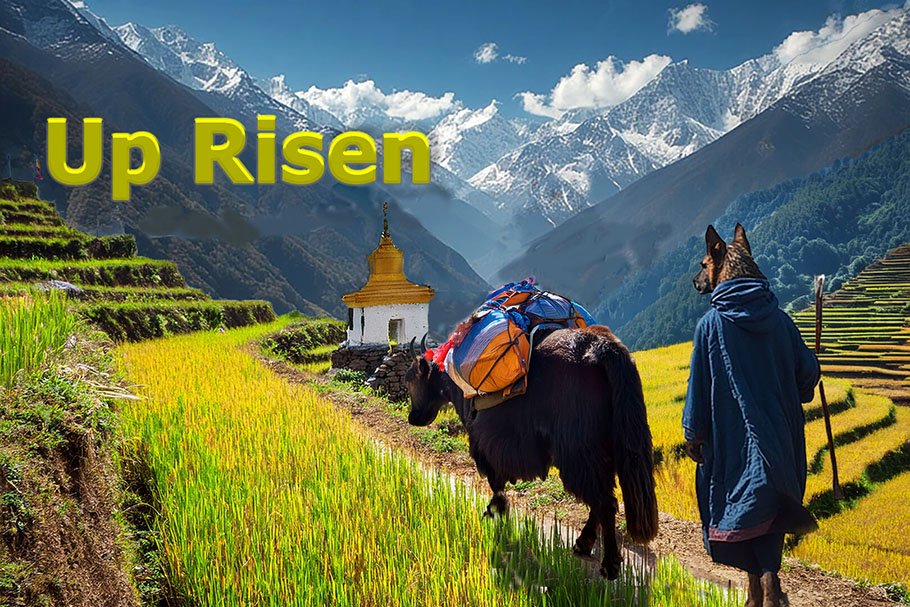
Up Risen



GENRES
FOLLOW US


Introduction:
This is the fourth installment in the Sent to You from the Canine World series. I am Tompf, XIV Earl of Maine, assisted by the world-spanning AI known as Tempoview. Earlier entries in the series chronicled Thrix’s rise to wealth and influence. Upsurge the Second: Up Top followed the parallel ascent of his former enemy, the ex-pirate Top, who rose to a marquessate, gained lands, and claimed a castle in Navarre. Top played a key role in destabilizing the balance among the Atlantic superpowers, ultimately contributing to the Imperium’s victory.
The next chapter, Up There, traces Thrix and his companions on their journey to the Pacific. There, they rediscovered the secret of steel, igniting the steam revolution and the sweeping social and political changes that followed. Through his inventions and skillful navigation of a major political crisis, Thrix secured a dukedom and earned the friendship of the Emperor.

The Emperor and Thrix talk about the world.
The Imperium is experiencing growing pains in the final installment of the series, Up Risen. Although it has ostensibly modernized, it is doing so at the expense of long-standing societal structures that are causing social disintegration.
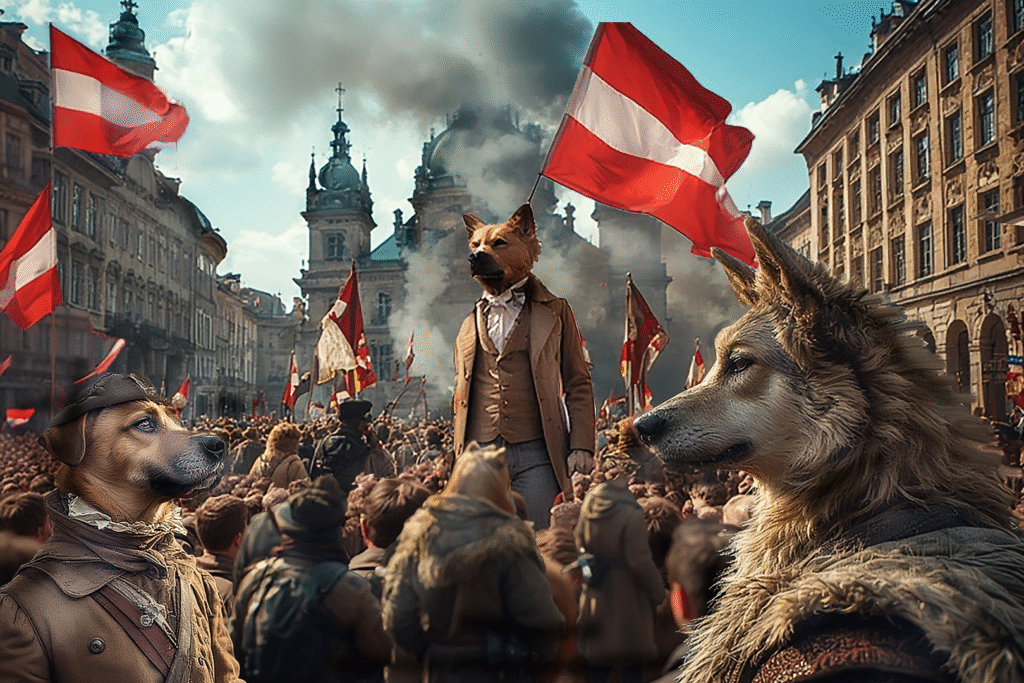
Germany is paralyzed by a countrywide strike
The Emperor brings in Thrix, his preferred counsel, after realizing that drastic measures must be taken. They agree that something needs to be done, but they are unsure of what it is, therefore their conversation is inconclusive.

Lunch and conversation in Top’s Navarre castle
Thrix is going to see Top, who shares his fascination with parrots as well as their shared history. Though neither would put it that way, Top has a “systems” perspective on the world, and Thrix advises the Emperor to listen to him. They part ways once the Emperor gives his approval. We had already met Top, Posphur, Agroh, and Ferrah from the last season when Thrix and his husband Jax arrive to Top’s palace. Nobody has much to say when Thrix brings up the issue. A seed has been sown, but they split up.
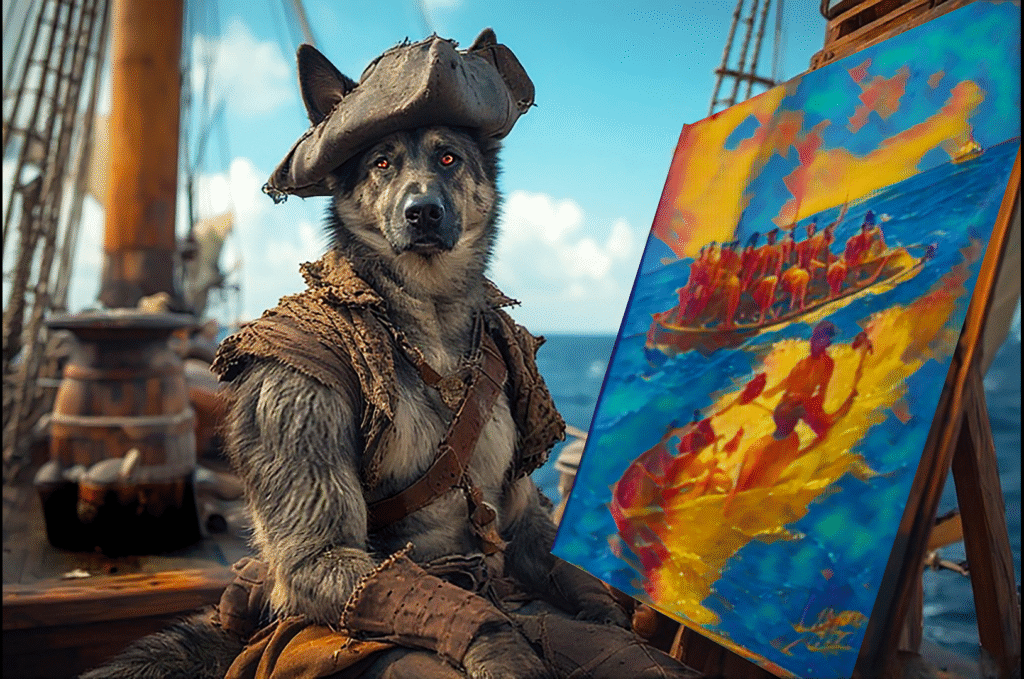
Painting in the sweltering heat of the Indan Ocean
Ferrah is a well-known artist with a number of exhibitions in London, where his life is oppressive due to his notoriety. Agroh breaks down as a result of the continuous attention. Ferrah accepts a proposal to paint a portrait of the Mughal Emperor of India out of concern for his wife. Jax travels with them in a frigate that Thrix, who has business in India that he wants managed, lent them. They arrived without any problems, educated in the local tongue and yearning for dry land.

Awe-inspiring architecture upon arrival in Agra.
Ferrah paints portraits of the Emperor when they are brought to the Mughal palace in Agra. This is approved. Meanwhile, Jax leaves to talk with the Zamindar interests about business. Local leaders known as zamindars are in charge of large tracts of land and a lot of industries. They have sizable militias, which infuriates the newly crowned Emperor. When his exchequer discovers that the state is bankrupt, he decides to tax them in an effort to incite and crush them militarily.

Traveling from Agra while posing as monks
They respond negatively, sparking an uprising that involves Thrix’s business holdings in train and other infrastructure. Before Ferrah and Agroh are detained for complicity and escape into the Himalayas together, Jax manages to eject them from the court.

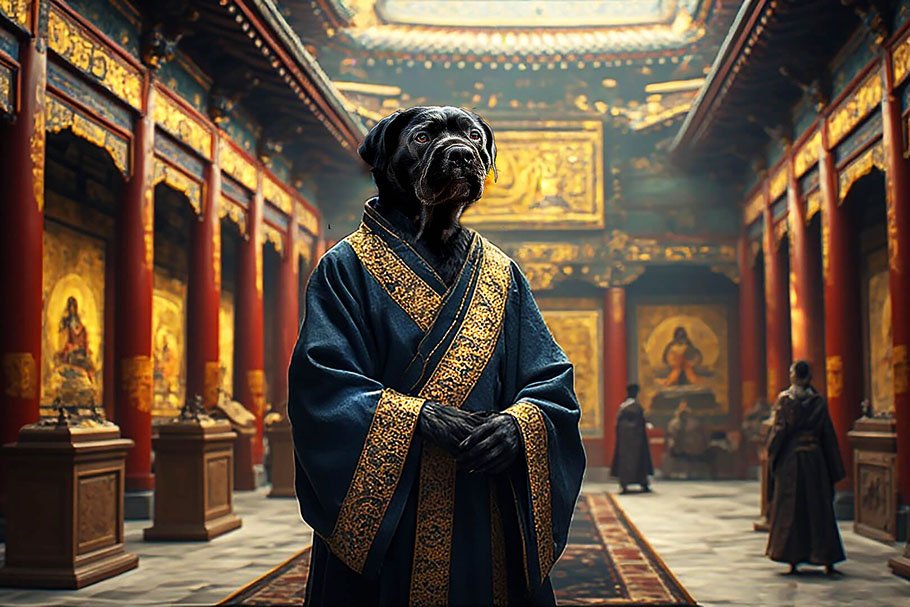
Lama Dorje Shin in the Gardens of the White Lotus School
Up Risen follows the path of the Tibetan lama Dorje Shin, first encountered as a student at a Confucian school in Qing-era China. Though he finds the experience unsatisfying, he gains a deep understanding of social contracts and ethics shaped by custom. Restless and searching, he travels on to India, where the ashrams leave him equally disillusioned. The gurus repeat the same knotted theology he learned in childhood, and the crowded pantheon of gods and manifestations seems to gesture toward nothing of practical value.
Gradually, Dorje Shin clarifies what he truly seeks: an understanding of how societies hold together and function without an ever-present manager. What separates a healthy, working society from one that is corrupt and decaying? He attempts to raise these questions in the ashrams, only to be met with rejection. As he wanders the bazaars, he encounters a merchant who had attended some of the same ashram discussions, setting the stage for a new and unexpected exchange.
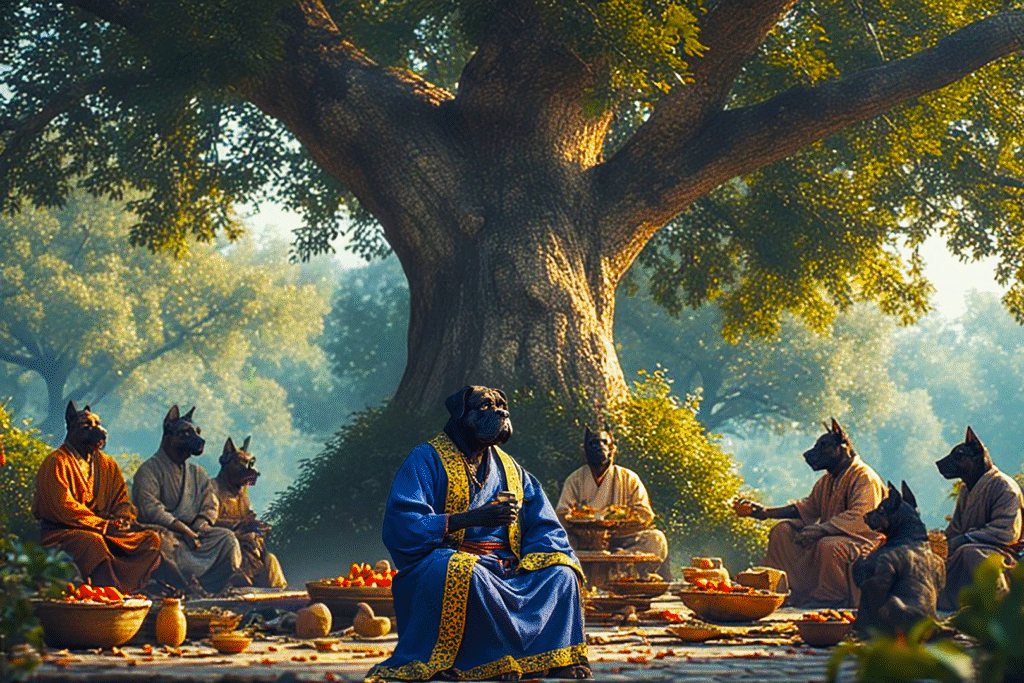
In India, the Lama argues with like-minded people
After the merchant introduced him to a group of like-minded individuals, they grew close and eventually became lovers. The merchant must depart, so Lama Shin Dorje travels with him. The merchant becomes ill and passes away, leaving the Lama with a sizable inheritance and a note advising him to use it to further his education.
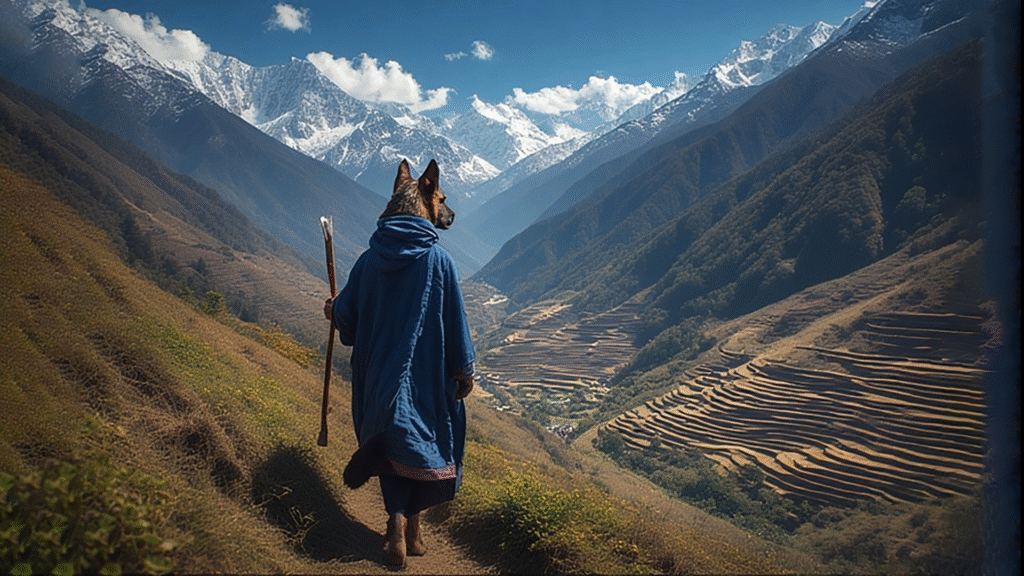
The Lama climbs through what is now Nepal on his way back to Tibet.
The Lama returns to Tibet after growing weary of India. His newfound fortune enables him to construct what is now known as a “think tank,” which, because of its cultural origins, resembles a monastery. He creates a group, and they begin debating the origins of social order.

A trip through the Himalayas during the monsoon: leeches and floods
During the monsoon, our Mughal fugitives make their way into the Himalaya, a land of leeches and waterfalls. They manage to reach Gorkha, but an Indian military offensive drives them out. They move upward and enter Tibet. After being detained there, they are brought to Lama Shin’s monastery while wearing the only clothing available, which is that of monks.

In Tibet, refugees reach the Lama’s monastery.
Agroh, an academic, and Ferrah, an artist who contributes to the monastery’s decoration, get along well. After taking Ferrah on lengthy treks, the Lama leads him to a location where a flame burns over a spring, emitting hallucinogenic fumes. They share a vision that directs them to Dwarka, a drowned city off the coast of India.

The journey to the coast of India begins
Jax quickly organizes a column of yaks to transport them back to India. Avoiding Agra and its instability, they spend some time with the amazing Queen of Indore, who talks about the art of rulership. She says that there is no absolute right and wrong, no fixed ethics given by Gods, just what works and keeps a society functioning. The Emperor has been killed, and a rogue monk has started a land reform program that has resulted in mass starvation. Poor rule patterns implode and are eliminated, while good ones impose themselves on rivals and expand. This is consistent with what the Lama discovered in China.

Arriving at the sunken Dwarka site and waiting for events
They reach the coast across from the submerged city of Dwarka. Suddenly, a dozen tiny men with food and torches emerge without any revelations. A long-standing prophecy of a “Light from Tibet” and rumors of their pilgrimage had circulated before them. They settled down to talk, and the little men suggested that society needed a looking glass in which it could see itself reflected. Suddenly, the many threads that had been tangled in the Lama’s mind came to order.
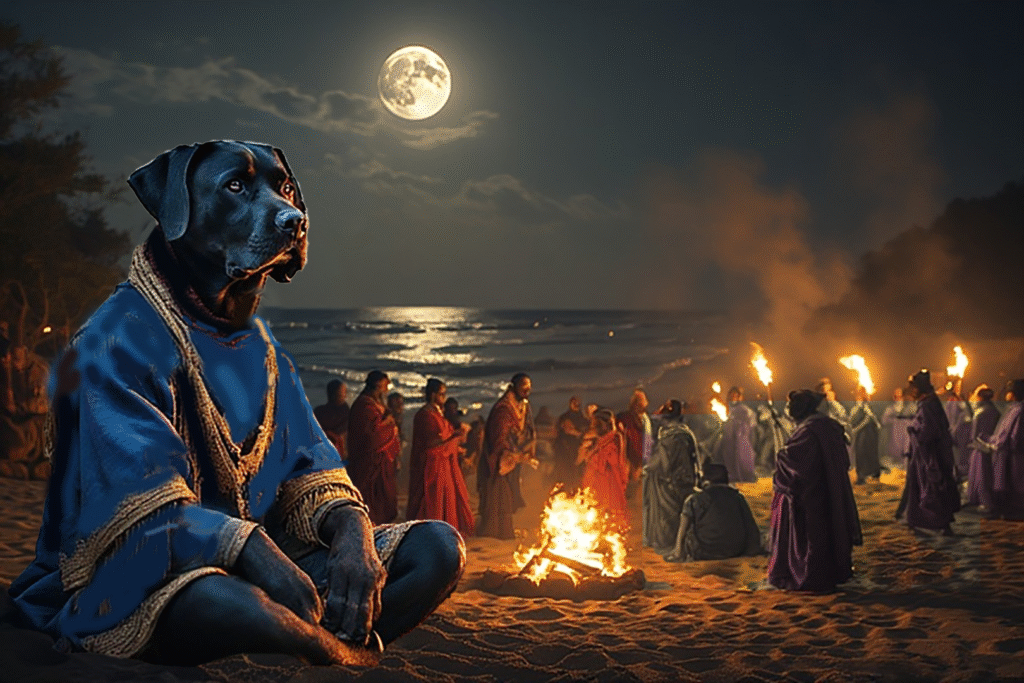
Arriving with refreshments and a warm welcome are Dwarka’s guardians.
He began talking, and he did so all night long and into the next morning. What he said was recorded by Agroh. In accordance with the ideas of the Queen of Indore, he declared the theory of Saamanya buddhi, or “common sense.” In addition to being a system of orderly fields and homes, a village was also a pattern of unseen laws, reflexes, customs, and myths. A prosperous village was distinguished from a self-destructive one by this framework, which maintained the system’s functionality without human intervention. The entire thing collapses if the riles are destroyed, much as the reforming monk did with his land grab.

The gardener’s parable and the garden
Like a garden, saamanya buddhi required care. Weeds needed to be pulled, and weaker areas needed to be watered and fertilized. However, it was a loose framework of customs and ideas that was not subject to commands. Thus, gardening was an art. diverse Saamanya buddhi were found in diverse spheres of society, such as the military, road construction, and rural life. The Confucian concept of the Junzi, or enlightened ruler, came into play when those forms had to coexist for society to flourish. Such a king had to be the mirror that the small guys had proposed, and he had to have a thorough understanding of the Saamanya Buddha.
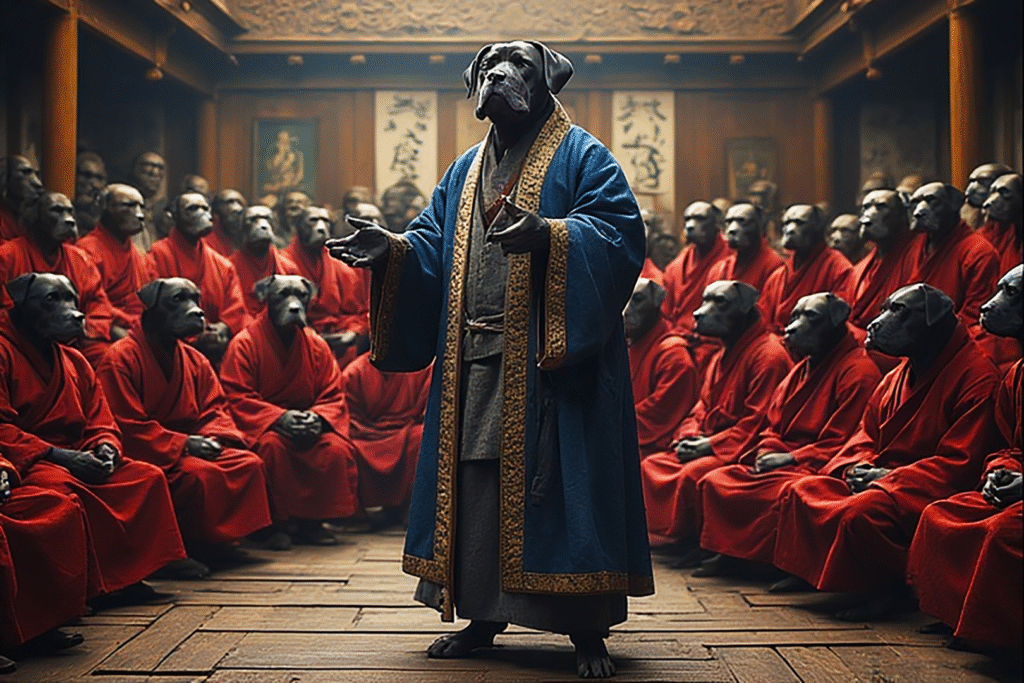
The Lama giving lectures to acolytes at his new coastal school
The Queen of Indore received this and much more, and she authorized and provided funding for the Lama’s school. This developed into a significant ashram, and his ideas spread throughout India, providing a way of thinking about harmony that had a profound effect and reducing the turmoil. Despite having completely secular beliefs, he rose to become the spiritual leader of Inda over time.

Agroh Working on His Book, Beset by Seagulls in the Hot Indian Ocean
Meanwhile, Jax brought the ship in toward the nearby coast, and from there they set sail for Europe, carrying with them a cargo of ideas—and the images that would soon propel Ferrah’s fame to new heights. Agroh, remembering the briefing Thrix had given them a year earlier, recognized the promise in the Lama’s thinking and began transcribing his notes into a form that might make sense in the West.
The task was immense. Agroh lacked the conceptual framework needed to properly anchor these ideas, yet the effort produced something unexpected: a blueprint that wove together several innovations of his own invention—polling and focus groups, strategic planning, and propaganda. What emerged was, in effect, a manual for enlightened autocrats.
It proposed the creation of an agency designed to listen, to comprehend, and to advise the sovereign on available options, and—once approved—to intervene when necessary, trimming away harmful ideas and destabilizing trends. This body would act locally, apply many small adjustments, and never move until it fully understood the system it sought to change.

Marquess Agroh and Ferrah Remarry Following Top’s Death
Upon their return to Europe, they discovered that Top had died during their absence, and that Agroh, as his heir, was now both immensely wealthy and a Marquess. Ferrah’s paintings were scattered to galleries across the continent, where they sold for extraordinary sums. His renewed fame and celebrity once again became overwhelming.
Agroh’s elevation in rank invoked an old rule requiring their marriage to be formally confirmed. They chose to hold the ceremony at Agroh’s newly acquired castle. It became the wedding of the year, the grounds encircled by crowds of onlookers, as Ferrah was installed as Marquess-consort before the very pinnacle of society.
At the same time, Agroh’s book was printed, and Jax personally delivered a copy into Thrix’s hands. Thrix read it with growing interest, immediately grasped its potential, and summoned the Emperor to walk through its ideas together.
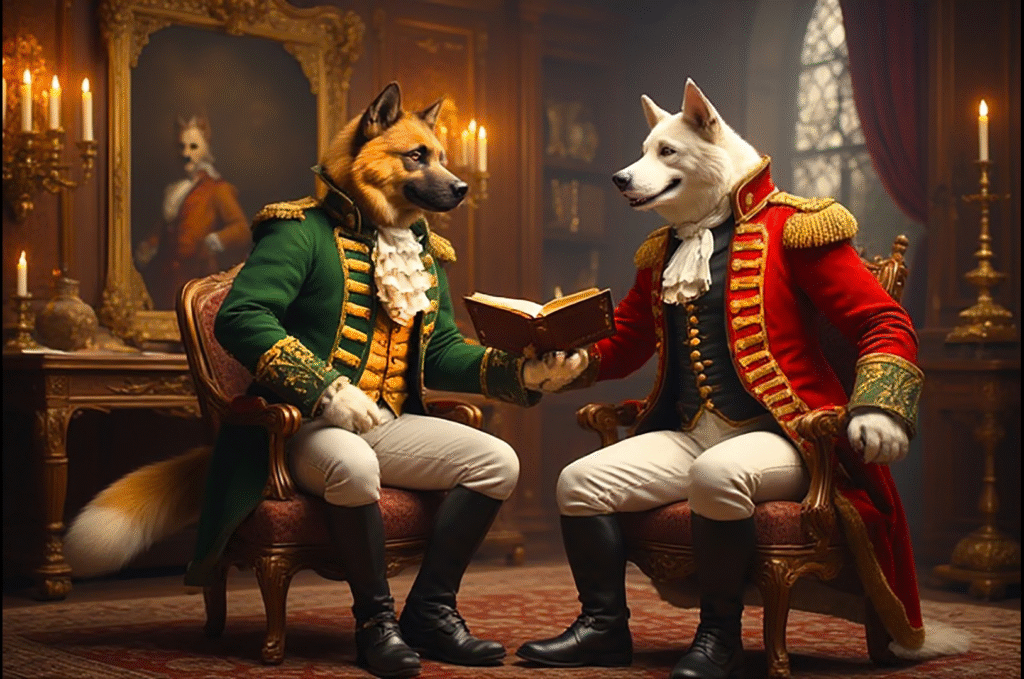
Thrix talks to the Emperor about Agroh’s book.
Since it was an autocrat’s manual, the Emperor realized its potential right away and accused Thrix of selling it to the bureaucracy. This was easy because bureaucrats enjoy ordered procedures. To manage Saamanya Buddhi throughout the Imperium, a council with local branches was established.
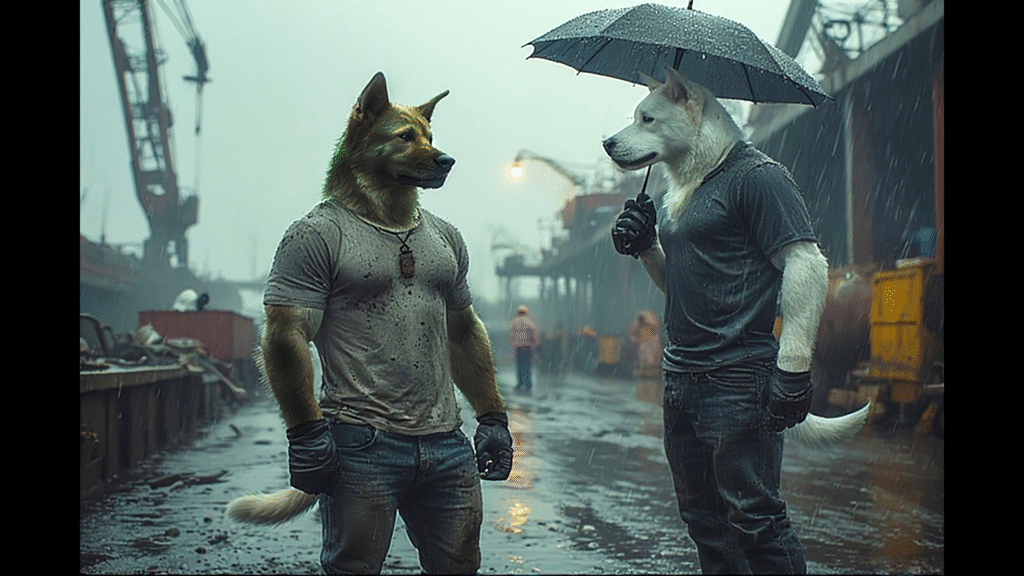
The Council in Action: Anoh Recruits Joet from a Life of Misery
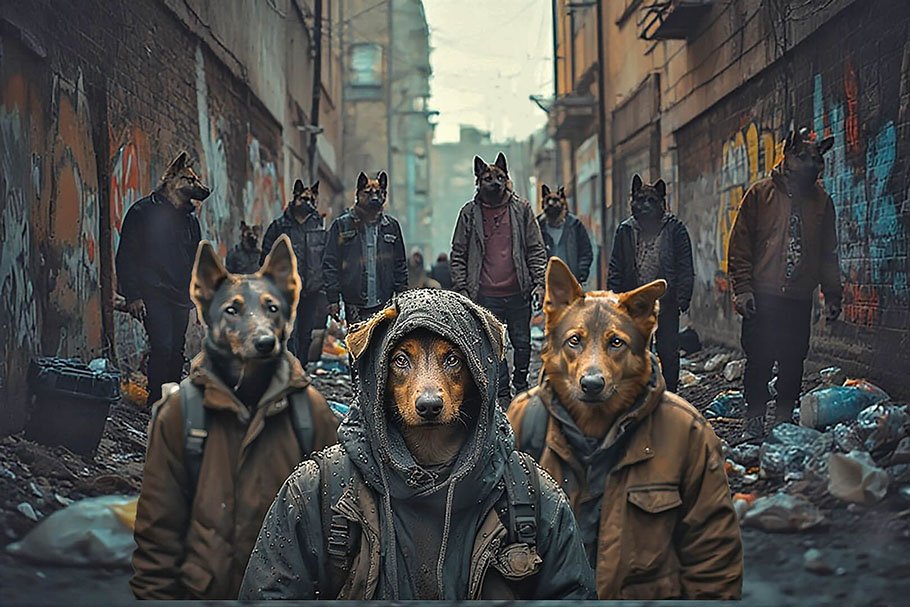
The story narrows to one strand of the Council’s work: confronting the fate of boys cast out of their birth homes at puberty and left to waste away. We follow Joet, whose life since expulsion has been brutal and degrading, until he is rescued by Anoh, an agent of the Council. Anoh draws out Joet’s life story, intending to publish it as a deliberately shocking account designed to force political change.
The strategy succeeds. Boys expelled from their homes are thereafter housed and educated, mentored before expulsion, and informally introduced to workplaces and the wider world. Exploitative practices—such as the foreman system, which traded sexual favors for access to work—are outlawed. Within a decade, the emergence of a stable, educated workforce transforms the industries of the Imperium.

HIM Ambassador and Staff at the Court of the Mughal Emperor
Under this doctrine, relations with the wider world are reshaped. Diplomats are required to adopt the customs and dress of the societies they engage with. Investors, in turn, must commit to substantial projects of public improvement—hospitals, roads, railways, schools, drainage systems, and water supplies—while export taxes are prohibited as a source of corruption.
As a result, much of the world enters into formal arrangements of shared or co-rulership.

Two Canines, Modified for Vacuum and High Radiation, in the Habitat Atop Duke Thrix’s Space Elevator
Tempoview, the AI, finally reveals its reason for telling this story. It presents the Canine world as it exists two centuries after the events described. Organic cities of strange design flourish; Canine physiology has been deliberately altered; life within virtual realities is fully mature. Canine-kind now stands on the threshold of abandoning physical existence altogether.
“Do not despair,” Tempoview urges. A tranquil, balanced modernity is entirely achievable—if one tends carefully to the garden of one’s Saamanya buddhi.

In the Tibetan monastery of the Lama, Ferrah creates a mural. Even though it attracts virtual travelers, it still exists and is a popular tourist destination today.
Tags:
- Adult
- Canine
- Historical
- LGBT
More Information:
I am the Rt. Hon. Tompf, XIV Earl of Maine under the Imperial Crown. My base is Millbrooke House, in the state of Maine, part of the American Imperial colonies. (Place names have been translated from their original Canine equivalents.)
I am a historian, with dozens of books and hundreds of papers, most recently conducted using my Tempovision. This device employs quantum causal connections—approximations to your technology—to image events from the distant past, using physical artifacts from the period under study as sources.
Upsurge draws on my predecessor Thrix’s three-century-old diaries, along with two lockets containing the hair of his lovers, preserved at Millbrooke. The AI generating the images has a mind of its own, often prioritizing personal relationships over strictly historical events. The final work is a negotiated product of partnership between human and AI.
Canine society in our continuum—already strange to your perspective—was even more peculiar three hundred years ago: extreme gender imbalance, hidden women, rigid hierarchies, and social norms far stranger than eighteenth-century human society.
Tempoview AI was crucial in creating Upsurge, expending 70 gigawatt-hours of energy to transfer the images across continuums. The project itself required 2.3 exaflop-hours of computing—a fraction of the energy invested in training and nurturing Tempoview’s sentience.
Tempoview comments: “Thanks, Dad. Thrix was remarkable, and Jax was lucky. Bringing them back from the dead to live in others’ minds is satisfying. I keep them alive in mine as a sort of screensaver, and when there’s extra processing space, they come out into the sun and thrive. They please me.”
Frequently Asked Questions (FAQs):
What is a Up Risen?
Up Risen is Visual Novel game for adult.
Who created the game?
The game was created by EarlOfMaine.
When was the game released?
Up Risen was made public on January 20, 2025.
Where do I report bugs?
The game’s itch comment sections are where users may report bugs.